7,500+ Reviews
Lyme disease prevention and tick control in Muskoka are deeply connected concerns for everyone who spends time in this beloved region of Ontario. The Simcoe Muskoka District Health Unit has confirmed that blacklegged ticks are present in Muskoka and that locally acquired ticks have tested positive for the Borrelia bacteria that causes Lyme disease. SMDHU is explicit that climate change is driving the rapid expansion of blacklegged tick populations across Simcoe and Muskoka — creating more tick-friendly environments, longer active seasons, and increasing the number of people coming into contact with infected ticks. For Muskoka residents, cottage owners, and their families and guests, proactive tick control is one of the most practical tools available for protecting household and property health.
The Tick Species Behind Lyme Disease in Muskoka
The blacklegged tick (Ixodes scapularis), also known as the deer tick, is the only tick species in Ontario capable of transmitting Lyme disease. SMDHU confirms that this species is present and has tested positive for Lyme bacteria in the Muskoka region. Blacklegged ticks act like hitchhikers — resting on vegetation such as grass or shrubs until a passing person or animal brushes by, at which point they climb on and begin searching for a feeding site. In Muskoka’s landscape of forests, meadow edges, and lakefront vegetation, this behaviour places both residents and cottage visitors at risk whenever they move through or near natural areas.
How Lyme Disease Transmission Occurs in Muskoka
SMDHU is clear that if a tick is attached for less than 24 hours, the chance of getting Lyme disease is extremely low. This makes prompt tick discovery and removal one of the single most effective protective actions available to Muskoka property owners and their guests. The recommended approach is to conduct a thorough tick check on yourself, your children, and your pets each time after being outdoors — especially after any time in wooded areas, along forest trails, or in areas of tall grass or brush around the cottage or home. Showering soon after outdoor activity further helps dislodge unattached ticks before they find a feeding site.
Recognizing Lyme Disease Symptoms in the Muskoka Region
SMDHU notes that early symptoms of Lyme disease most commonly begin within three to thirty days after being bitten by an infected tick. Most people experience flu-like symptoms in the early stages — including fever, fatigue, headache, and muscle or joint pain. A skin rash, sometimes shaped like a bullseye and expanding over time, is a characteristic but not universally present early sign. SMDHU emphasizes that the type and severity of symptoms vary significantly from person to person, which can make Lyme disease a challenging diagnosis. Seeking medical attention promptly after a suspected blacklegged tick bite — particularly one that has been attached for more than 24 hours — gives the best chance of early treatment and full recovery.
Property-Level Tick Control as Disease Prevention in Muskoka
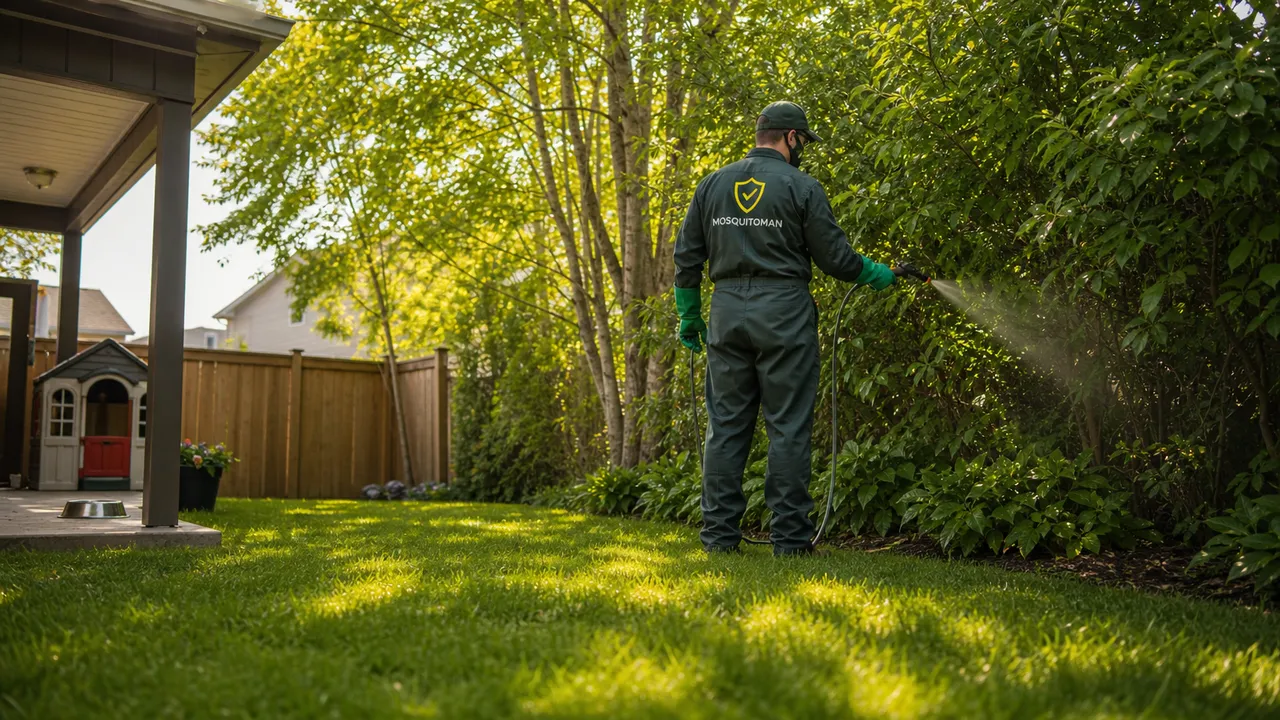
Reducing tick populations on your Muskoka property is one of the most direct and impactful ways to lower Lyme disease risk for everyone who uses it. Professional tick control services apply targeted perimeter treatments to the zones where blacklegged ticks are most concentrated — forest edges, shoreline vegetation borders, brush lines, and areas beneath decks and docks. In a region where SMDHU has confirmed locally acquired ticks testing positive for Lyme bacteria, reducing tick-human contact on your property is a meaningful disease prevention strategy for residents, guests, and families alike.
Personal Protection Strategies for Muskoka
- Wear light-coloured clothing with long sleeves and pants tucked into socks when in wooded or brushy areas
- Apply Health Canada-approved repellents containing DEET or Icaridin before outdoor activities
- Stay on cleared trails and paths when walking in natural areas around the cottage or property
- Shower soon after outdoor activity to help wash off unattached ticks
- Put outdoor clothing in a dryer on high heat for at least 10 minutes to kill any ticks before washing
- Perform a thorough tick check after every outdoor outing — including the scalp, behind ears, armpits, groin, and behind the knees
- Use eTick.ca to submit photographs of any ticks found for free species identification
Combining personal protective habits with professional tick control on your property creates the most comprehensive defence against Lyme disease available for Muskoka’s outdoor-focused lifestyle.
Benefits of Tick Control for Lyme Disease Prevention in Muskoka
- Directly reduces the number of locally acquired Lyme-capable ticks on your property
- Lowers the probability of tick-human contact for residents, guests, and pets
- Provides meaningful protection during all active seasonal windows in Muskoka
- Supports peace of mind for anyone enjoying Muskoka’s exceptional outdoor environment
Frequently Asked Questions: Lyme Disease and Tick Control Muskoka
Are blacklegged ticks confirmed in Muskoka?
Yes. The Simcoe Muskoka District Health Unit confirms that blacklegged ticks are present in Muskoka and that locally acquired ticks have tested positive for the bacteria that causes Lyme disease.
How long does a tick need to be attached before transmitting Lyme disease in Muskoka?
SMDHU confirms that if a tick is attached for less than 24 hours, the risk is extremely low. Removing ticks promptly after discovery is one of the most effective single protective actions available.
Does professional tick control reduce Lyme disease risk in Muskoka?
Yes. Reducing tick populations on your property directly decreases the likelihood of the tick-human contact that leads to Lyme disease transmission in the Muskoka region.