7,500+ Reviews
Key takeaways
- Yes, eco-friendly yard mosquito treatments are considered safe for kids and dogs when they’re applied by a licensed technician and used according to label directions.
- Mosquito Man’s yard program combines a standing-water assessment, larvicide where appropriate, and targeted barrier treatment, then repeats about every 21 days.
- Keep kids and pets out of treated areas until surfaces are dry, which is generally about 30 to 45 minutes.
- Store pet bowls, beds and kids’ toys before the visit, and give your dog fresh, untreated water afterward.
What this guide helps you do
You want a yard where the kids can run around and the dog can sniff every corner without a cloud of mosquitoes. You also want to know that whatever goes on your lawn and shrubs isn’t going to cause a problem. Both goals are realistic, and they don’t require a complicated routine.
This guide is for Ontario families with children and a dog who are booking, or already receiving, scheduled yard mosquito treatments from Mosquito Man. It walks through the whole service day in order: prep, the visit itself, and getting back outside.
- Time: about 20 minutes of prep, a short supervised window during service, and roughly 30 to 45 minutes of dry time afterward.
- Difficulty: easy. No tools beyond a bucket, a tarp or lid, and a spot indoors to park toys and pet items.
- What you need: your service confirmation, the name of your technician if you have it, and a plan for where the dog and kids will be during the visit.
Are eco-friendly yard mosquito treatments safe and effective?
They’re considered safe when used as directed, and they work best when treatment targets where mosquitoes breed and rest, then repeats on a schedule. “Eco-friendly” is a loose marketing term, so it helps to look at what the authorities say about the methods behind it.
What public health agencies say about safety
Health Canada’s mosquito guidance recommends eliminating standing water (bird baths, flower pots, gutters) and using approved larvicides such as Bti and methoprene where appropriate. The CDC’s larvicide page says larvicides are safe when used per label directions, and it separates homeowner forms (dunks and bits) from professional products.
Bti is short for Bacillus thuringiensis subspecies israelensis. It’s a biological pesticide that targets mosquito larvae, and Health Canada’s archived Bti fact sheet (2011) describes PMRA regulatory oversight and a safety record when it’s used as directed. The phrase that matters in every one of these sources is “as directed.” That’s why this guide keeps pointing you back to the label and your technician.
Why scheduled treatment works
Larvicide stops mosquitoes before they become biting adults, but it only works where larvae live, in water. Adults that hatch in a neighbour’s yard, a ditch or a catch basin will still fly into yours. Toronto Public Health runs its own larvicide program in public standing water such as catch basins as part of West Nile virus prevention, which shows how widespread the breeding sites are.
That’s the reason Mosquito Man’s yard program doesn’t stop at one step. Each visit includes a property inspection and standing-water assessment, larvicide where appropriate, and targeted barrier treatment on the trees, shrubs and other spots where adults rest. Five scheduled treatments, about every 21 days, keep the pressure on through the season.
Before treatment: five prep steps
Good prep takes about 20 minutes and does two jobs: it removes mosquito habitat you can fix yourself, and it keeps your family’s things out of the way. The treatment itself is targeted at breeding and resting areas, not a fog released over the whole house, so you’re mostly clearing space.
Step 1: Walk the yard for standing water and pet access
Walk the property once, slowly, looking at ground level and at anything that holds water.
- Tip out or dump flower pot saucers, buckets, wheelbarrows, kids’ pool toys and old tires.
- Flip or cover anything that collects rain, such as tarps, boats and wading pools.
- Check eavestroughs for sagging sections or clogs that hold water.
- Note where your dog likes to dig, lounge or drink, so you know which spots to block off.
Health Canada notes that controlling breeding sites matters, and a weekly emptying routine can interrupt the mosquito life cycle. If you want more on this, our Ontario yard mosquito guide covers standing water, vegetation and repellents in more detail.
Step 2: Bring pet items and kids’ toys indoors or under cover
Move these before the technician arrives:
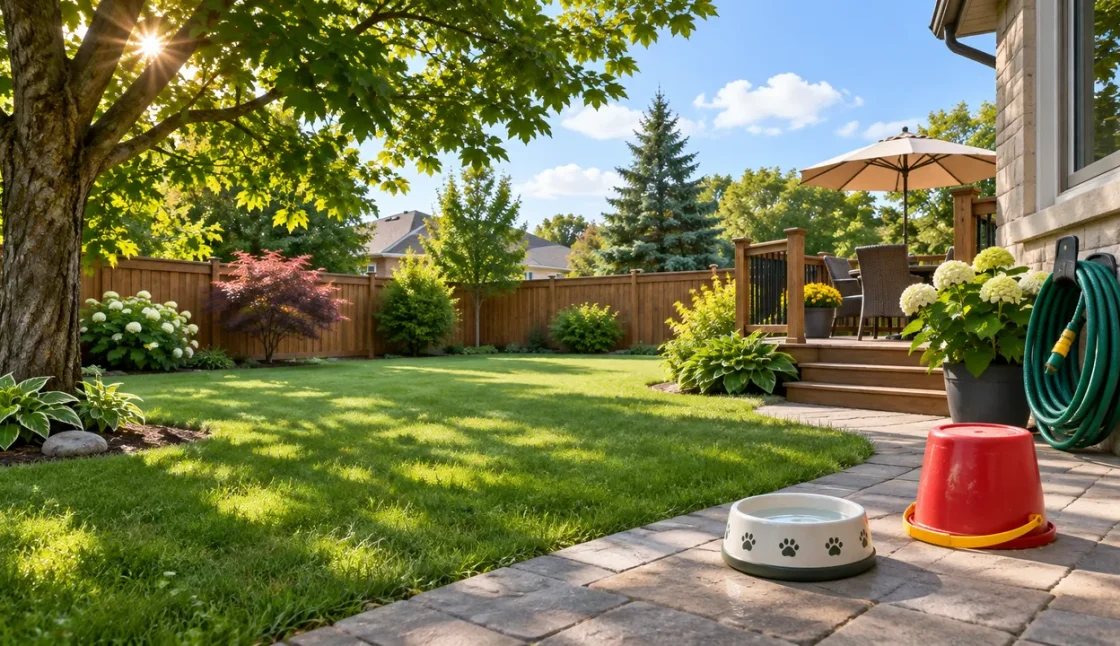
- Dog food and water bowls
- Chew toys, balls and tug ropes
- Dog beds, blankets and outdoor mats
- Sandbox toys, bikes, scooters, sports gear and chalk
- Picnic items and cushions on patio furniture
If something’s too large to move, such as a playset, mention it to the technician so they can tell you which parts to stay off afterward.
Step 3: Flag any water features
Rain barrels, bird baths and ornamental ponds are common mosquito breeding spots, and they’re also where dogs sometimes drink. Tell your technician about each one. Where water can be drained or changed, do that first. Where it can’t, an approved larvicide such as Bti is the usual option, applied according to its label.
Warning: Don’t treat water that’s meant for drinking, and don’t add your own DIY products on top of a scheduled treatment. Layering products can mean you’re no longer following either label.
Step 4: Pick a supervision plan
Decide where each person and animal will be during the visit. Most families choose a room with a window on the opposite side of the house from the work. Plan for the dog too: a crate, a closed room, or a family member taking a walk off-property.
Step 5: Clear the way for the technician
Unlock gates, put away garden hoses that block paths, and trim back anything that stops access to shrub lines, foundation edges and eaves. If a gate has a code or the dog is loose behind it, say so in your booking notes.
Do this before we arrive
- Empty or cover standing water you can fix yourself
- Bring in pet bowls, beds and chew toys
- Move kids’ toys, bikes and play gear indoors
- Tell the technician about rain barrels, bird baths and ponds
- Unlock gates and clear access to shrubs and foundation edges
- Decide where the kids and dog will wait
Checkpoint: stand at the back door and look across the yard. If the lawn is clear of toys and bowls and nothing is holding water, you’re ready.
During treatment: what to expect
A visit follows a predictable order: inspection, larvicide where standing water can’t be drained, then targeted barrier treatment on high-risk zones. You can stay out of the way and still stay informed.
What the technician does
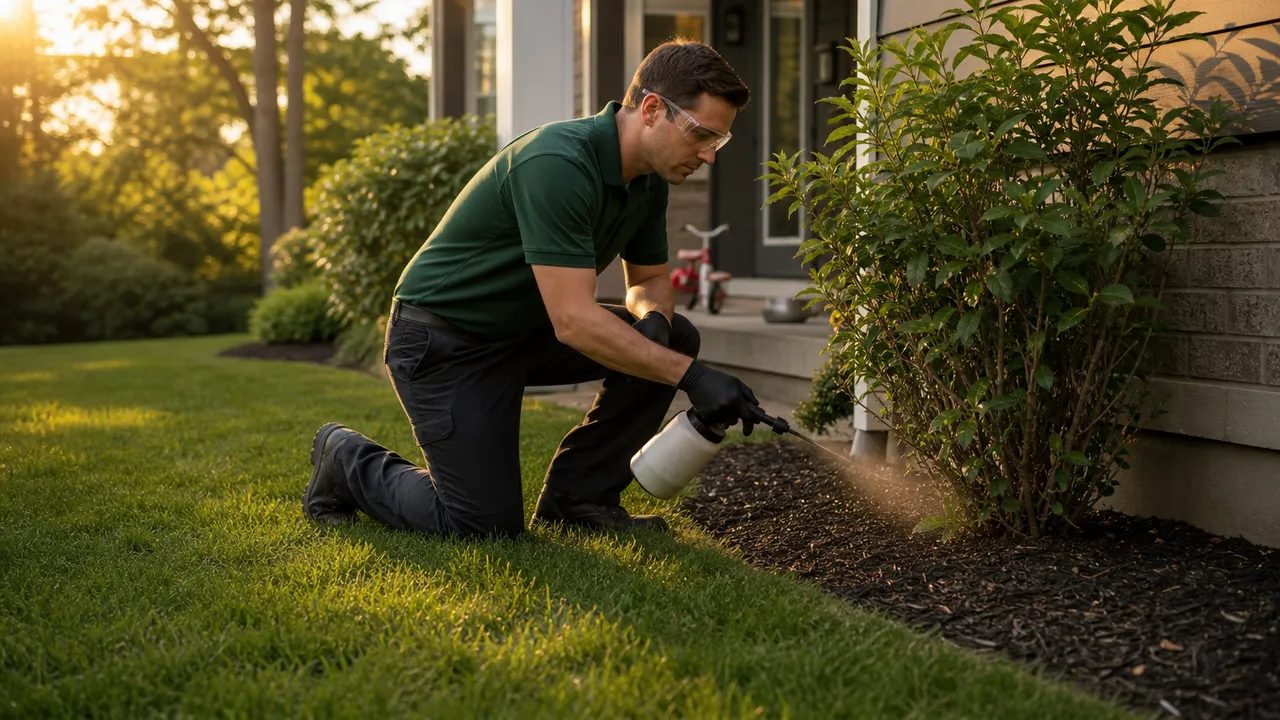
Your licensed, insured Mosquito Man technician inspects the property first, checking for standing water and the shady, humid spots where mosquitoes rest. Larvicide goes into water that can’t be drained or changed, where appropriate. Barrier treatment then goes onto the trees, shrubs and other targeted areas, which is where adult mosquitoes shelter.
What you do while they work
- Keep kids indoors or well away from the treated zones.
- Keep the dog inside, in a crate, or on a leash away from the work area, as the technician directs.
- Close windows near the work area if the technician suggests it.
- Stay available at the door in case the technician has a question.
Questions worth asking before they leave
- Which zones did you treat today?
- Was any standing water on my property treated, and where?
- Is there anything about my layout, such as a playset or deck gap, that I should keep the dog away from?
- How long until the treated areas are dry today?
While we treat
- Kids and pets stay inside or away from the treated zones
- Windows near the work area stay closed if asked
- You’re reachable for questions
- You get a clear answer on which areas were treated and when they’ll be dry
If your dog is anxious around strangers or equipment, tell the office when booking and ask whether the visit can be timed for a walk, a vet appointment or a day when a family member is home. A calm dog behind a closed door is a better plan than a stressed dog on a leash.
After treatment: when to go back outside
Go back outside once the treated surfaces are dry. Mosquito Man’s guidance is that this is generally about 30 to 45 minutes. That number is approximate: humidity, shade, wind and product type can all change it, so follow your technician’s instructions if they give you a different time.
Step 1: Wait until treated surfaces are dry
Check shrubs, grass and fence lines by eye and by touch with a dry hand. If anything is still visibly wet, wait a little longer.
Step 2: Reset the yard
- Put toys and furniture cushions back on dry surfaces.
- Fill the dog’s bowls with fresh, clean water from the tap.
- Return the dog’s bed and mats once the yard is dry.
- Ease back into play. There’s no need to rush the first game of soccer.
Step 3: Supervise the dog for the first 15 minutes
If your dog goes out right after the dry period, stay with them. Watch for licking or chewing on shrubs, mulch edges and fence bases. If you see it, redirect them with a toy and a treat. A leash for the first outing is a simple way to keep them out of the treated shrub lines.
Step 4: Recheck hotspots later in the day
Rain or sprinklers can leave new puddles. Scan planters, saucers, tarps, buckets and eavestrough sections again in the evening and empty anything that’s holding water.
Warning: Don’t hose down treated shrubs, lawn edges or foundation areas right after service unless your technician tells you to. Washing product off too early can reduce how well it works.
After we’re done
- Treated surfaces are dry before anyone goes out
- Pet bowls are refilled with fresh tap water
- Toys and cushions are back on dry surfaces
- The dog is supervised on the first outing
- Standing water is rechecked in the evening
Pet-specific advice for dog owners
Dogs get into more things than kids do, so pets need a few extra habits. All of them are simple, and all of them are conservative on purpose.
| Item | Before service | After service |
|---|---|---|
| Food and water bowls | Bring indoors | Refill with fresh tap water once the yard is dry |
| Beds, blankets, mats | Bring indoors | Return after dry time; wash anything left outside during service |
| Chew toys and balls | Bring indoors | Return after dry time; clean any that were left out |
| Rain barrel or bird bath | Tell your technician | Don’t use as drinking water for pets |
Water and bowls
Only ever give your dog fresh, untreated water from a clean bowl. Standing water in a bird bath, rain barrel or garden container isn’t a drinking source, whether or not it was treated, and Health Canada and the CDC both point to label directions as the rule for larvicide use.
Walks
Walk your dog while they’re out of the yard during the service window, or use the time for a longer loop than usual. After service, keep them on a leash around freshly treated shrubs and foundation edges until those areas are dry and your technician has said it’s fine.
If your dog got into a treated area
If your dog investigated a treated spot straight away, wipe their paws and coat with a damp cloth and keep them from licking the area. Then check the product label or call your technician to confirm whether anything more is needed. Don’t assume nothing is needed, and don’t guess at home remedies.
Toys, beds and soft items
Anything soft that was left outdoors during service goes in the wash. Hard toys that were left out can be wiped with a damp cloth or rinsed. When in doubt, replace a chewed-up toy rather than hoping for the best.
Troubleshooting common worries
| Problem | What to do |
|---|---|
| The dog slipped out and ran across wet shrubs | Wipe paws and coat with a damp cloth, stop licking, and call your technician or check the label |
| Kids touched a treated area before it dried | Have them wash hands with soap and water, and wait for the dry time before going back |
| Rain started right after service | Tell the office; ask whether re-treatment or any extra precaution is needed |
| The dog is too stressed for the visit | Ask to reschedule within a short window, or confirm an indoor plan before the technician arrives |
| You forgot to move toys or bowls | Tell the technician; bring items in now, and wash or wipe them after the dry time |
| Mosquitoes are still biting between visits | Recheck for standing water, then call within 14 days if it persists (see below) |
Next steps
If you’ve followed this plan, you’ve emptied what you can, moved the right things indoors, and gone back out at the right time. Keep up the weekly standing-water check between visits. A few minutes with a bucket each weekend adds to what the treatment is doing, and our mosquito prevention tips cover repellents and gear for evenings on the patio.
If you’re still comparing providers, our guide to eco-friendly outdoor pest control has a verification checklist you can use with any company. Mosquito Man’s yard service runs with no contracts and cancellation at any time, and it’s covered by the Super Hero Guarantee: call within 14 days for a free re-treatment, or get a full refund if you’re not completely satisfied.
Frequently asked questions
Should I keep my kids and dog indoors all day after treatment?
Usually not. Mosquito Man’s guidance is that treated outdoor areas are generally fine to return to after about 30 to 45 minutes, once surfaces are dry. That time can vary with weather and product, so go with whatever your technician tells you on the day.
Can essential oil or “natural” sprays replace a professional treatment?
Plant-based sprays such as citronella, garlic or cedar oil are marketed widely, but their effects tend to wear off quickly and they don’t reach larvae in standing water. Some essential oils can also irritate or harm pets, so check with your vet before using them around your dog. A program built on source reduction, Bti where water can’t be drained, and targeted barrier treatment is the better-supported approach.
What if mosquitoes come back before the next visit?
Recheck your yard for standing water first, since a forgotten bucket or clogged eavestrough can restart breeding quickly. If mosquitoes are still a problem, call within 14 days of your service and Mosquito Man will re-treat at no charge under the Super Hero Guarantee.
Who should I call if I’m worried about exposure?
Start with the product label and your service provider, who can tell you exactly what was applied. If a person swallowed product or has symptoms, call the Ontario Poison Centre at 1-800-268-9017, or 911 for an emergency. If your dog swallowed product or seems unwell, call your veterinarian or an emergency vet clinic right away and have the product details ready.