7,500+ Reviews
Effective tick control in Muskoka starts at the edges of your own property. The Simcoe Muskoka District Health Unit confirms that blacklegged ticks are present in Muskoka and that locally acquired ticks have tested positive for the Lyme disease bacteria. SMDHU also emphasizes that climate change is driving the rapid expansion of blacklegged tick habitat across the Simcoe-Muskoka region — meaning that tick pressure on Muskoka properties is not only real today but is growing season by season. Whether your Muskoka property is a year-round home in Bracebridge or Gravenhurst, a seasonal cottage on Lake Muskoka, or a remote lakefront retreat near Huntsville or Port Carling, understanding where ticks concentrate and how to reduce their presence is essential for protecting everyone who enjoys time outdoors there.
Where Ticks Concentrate on Muskoka Properties
SMDHU describes ticks as creatures that rest on vegetation such as grass or shrubs along forest trails, climbing onto passing people or animals in search of a feeding site. On Muskoka properties, the highest-risk zones are the transition edges between any maintained or open area and adjacent forest, shoreline brush, rocky outcroppings with ground cover, and naturalized vegetation. Garden beds, areas beneath docks and decks, wood piles near the cottage or home, and any sections of tall grass or low shrubs bordering the forest are all zones where blacklegged ticks can persist throughout the active season.
How Wildlife Carries Ticks Onto Muskoka Properties
Muskoka hosts one of Ontario’s largest deer populations, and deer movement through cottage and residential properties is a primary driver of tick introduction across the region. White-footed mice, chipmunks, and the migratory birds that use Muskoka’s extensive lake and forest corridors also transport blacklegged ticks from surrounding wilderness onto maintained property areas. SMDHU notes that climate change is creating more tick-friendly environments and longer active seasons — conditions that are particularly pronounced in Muskoka, where warming temperatures are extending the window during which ticks can survive and reproduce.
Yard and Property Modifications That Reduce Tick Habitat in Muskoka
The Ontario government recommends creating a border of gravel or wood chips at least one metre wide around your property if adjacent to a wooded area or tall grass — a strategy that is especially practical on Muskoka cottage lots where the forest often begins just steps from the building. Keeping grass and any maintained ground areas trimmed short, removing leaf litter, clearing brush piles, and stacking firewood off the ground and away from the cottage all eliminate the harborage zones ticks need to survive between host encounters. Moving children’s play equipment and seating areas away from wooded edges and into sunnier, open areas further reduces tick exposure for those most at risk.
Professional Property Tick Treatments for Muskoka
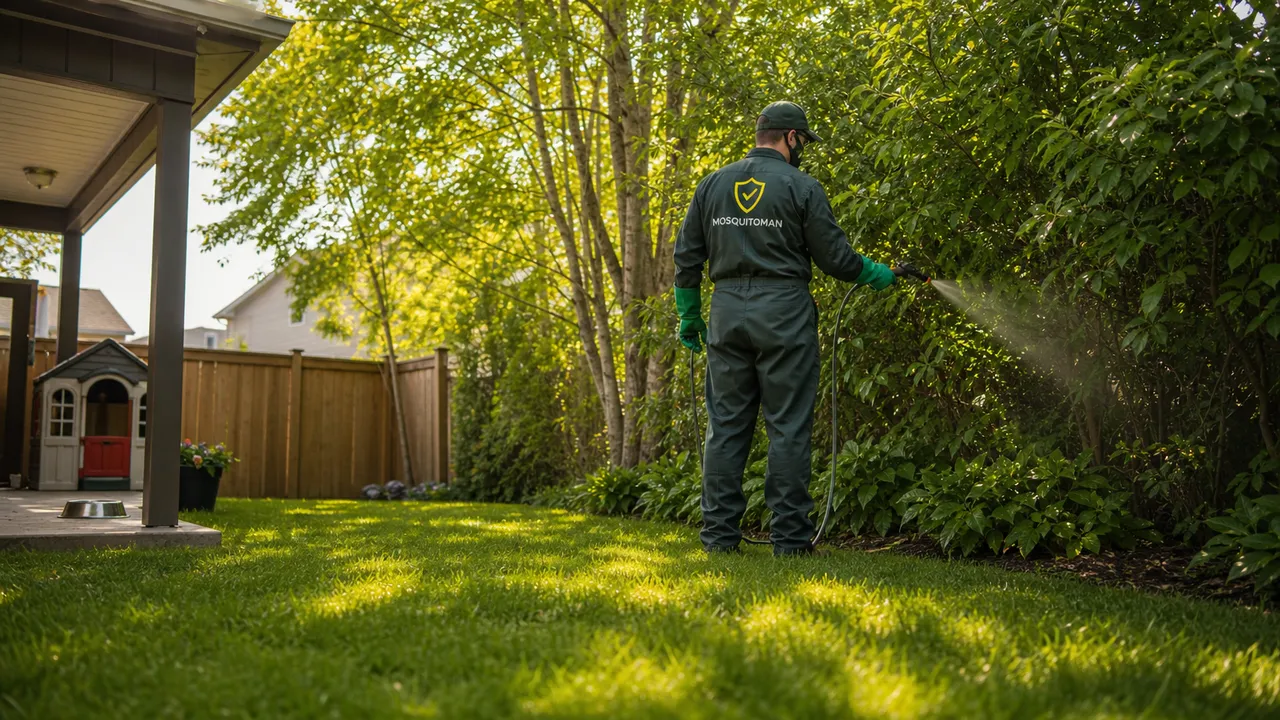
When habitat modifications are not enough — particularly on Muskoka properties that border forest or shoreline vegetation over a large perimeter — professional perimeter treatments deliver targeted, reliable results. Licensed technicians apply barrier sprays along the specific zones where blacklegged ticks are most active, using Health Canada-approved products that provide effective knockdown and lasting residual protection while remaining safe for people and pets once fully dry.
DIY vs. Professional Tick Control in Muskoka
- DIY products offer some benefit on smaller, more open properties with managed perimeters
- Professional treatments provide far more thorough coverage on forested-edge or large lakefront properties
- Seasonal programs prevent re-infestation more reliably than single applications
- Licensed professionals identify local tick species and tailor treatments to Muskoka’s conditions
For families, cottage guests, and pets spending time outdoors in Muskoka’s forested environment, professional tick control delivers the most comprehensive protection available throughout the active season.
Benefits of a Professionally Treated Muskoka Property
- Greater freedom for children, guests, and pets to enjoy outdoor and lakefront spaces safely
- Reduced risk of Lyme disease and other tick-borne illnesses
- More enjoyable outdoor time at the cottage or home throughout Muskoka’s beautiful seasons
- Long-term tick population reduction with consistent seasonal treatment
Frequently Asked Questions: Property Tick Control Muskoka
What is the most effective way to reduce ticks on a Muskoka property?
Combining habitat modifications — maintaining gravel barriers, removing leaf litter, trimming vegetation — with professional seasonal perimeter treatments delivers the strongest long-term results on Muskoka’s forested and lakefront properties.
How often should a Muskoka cottage or home be treated for ticks?
Spring and fall treatments target the two main peak windows of blacklegged tick activity. Higher-risk properties bordering dense forest may benefit from additional summer applications.
Can I treat my Muskoka cottage lot on my own?
DIY products can help manage lighter infestations, but professional-grade treatments are significantly more thorough and longer-lasting on the large, forested-edge properties common across Muskoka.