7,500+ Reviews
Several Hamilton pest control companies offer outdoor treatments they describe as eco-friendly, but the label alone tells you very little. “Green,” “natural” and “organic” aren’t regulated terms for outdoor pest control in Canada. What you need is a way to check what a company actually does in your yard. This guide shows you how to do that, step by step, and gives you a FAQ and an indicative pricing guide along the way.
What you’ll end up with: a short list of providers, a clear picture of the treatment plan that fits your yard, realistic price expectations, and a prepped property ready for a free estimate.
Who it’s for: Hamilton-area homeowners dealing with mosquitoes or ticks (and sometimes ants, spiders or wasps) who want to keep treatments targeted, label-compliant and sensible around kids, pets and gardens.
What you need: a phone for photos, 20 minutes to walk your property, and the list of questions in Step 4.
Difficulty and time: easy. Plan about an hour of research and a 15 to 30 minute walkthrough with the technician.
What eco-friendly outdoor pest control means in Canada
In practice, “eco-friendly” outdoor pest control rests on three things:
- Inspection-led, targeted treatment. The technician finds where pests breed and rest, then treats those zones instead of fogging or blanket-spraying the whole property.
- Registered products used exactly as labelled. Health Canada’s Pest Management Regulatory Agency (PMRA) regulates pesticide products in Canada. Even products marketed as natural are regulated when they’re sold as pest control products. Health Canada’s “Use pesticides safely” guidance tells people to use only registered Canadian products, to read the label for the pests, locations and product numbers it covers, and to avoid homemade mixtures.
- Non-chemical steps first. Removing standing water, trimming vegetation, clearing leaf litter and sealing entry points reduce the pest population before any product goes down. Ontario’s guidance on controlling mosquitoes (Ontario.ca, May 20, 2022) points to larvicides when reducing or removing standing water isn’t feasible, which is the same logic professionals follow.
Hamilton yards make this matter. Shaded lots, wooded edges, ravine-side properties, leaf litter and damp corners all hold moisture and shelter, and that’s where mosquitoes rest and ticks wait. Properties closer to the lake and wetlands see mosquitoes build quickly, which we cover in more detail in our guide to Hamilton yards near Lake Ontario.
Step 1: Walk your yard and map the problem zones
Do this before you call anyone. A provider can only quote accurately if you can describe where the problem is.
- Walk the full perimeter in the late afternoon or early evening, when mosquitoes are most active.
- Photograph anything that holds water for more than a few days: clogged eavestrips, plant saucers, tarps, kiddie pools, birdbaths, buckets, low spots in the lawn.
- Note shaded, damp or overgrown areas: dense shrubs, ivy, woodpile edges, fence lines, the border where lawn meets trees.
- Mark where your family actually spends time: patio, play area, vegetable garden, dog run.
- Estimate your yard size, or find the lot dimensions on your property documents.
Checkpoint: you should have a list of three to six zones and a handful of photos. If you found nothing, look again after rain.
Step 2: Do the free source-reduction work first
Source reduction is the most eco-friendly action available, and it costs nothing. It also makes any professional treatment work better.
- Empty, flip or cover anything that holds water, weekly.
- Clean gutters and make sure downspouts drain freely.
- Rake leaf litter away from the foundation, fence lines and the edges of garden beds.
- Mow tall grass and trim low branches so sunlight and airflow reach the ground.
- Move woodpiles and brush away from the house.
Warning: don’t skip this because a treatment is booked. Larvae can develop in a single bucket or clogged gutter, and a barrier treatment can’t fix a breeding site you left in place.
Step 3: Match the approach to the pest
Mosquitoes
Mosquito control works as a program. Breeding conditions change with rain and temperature, and adults move between resting spots in shrubs and trees. A solid program combines a property inspection, standing-water assessment, larvicide where appropriate, and targeted barrier spraying on foliage and resting areas.
Our Yard Protection plan follows this sequence: five scheduled treatments roughly every 21 days across the season. On our mosquito FAQ we state that a treatment lasts approximately three to four weeks, depending on rainfall, environmental conditions and the treatment selected. See our mosquito control in Hamilton page for how the packages are structured.
Ticks
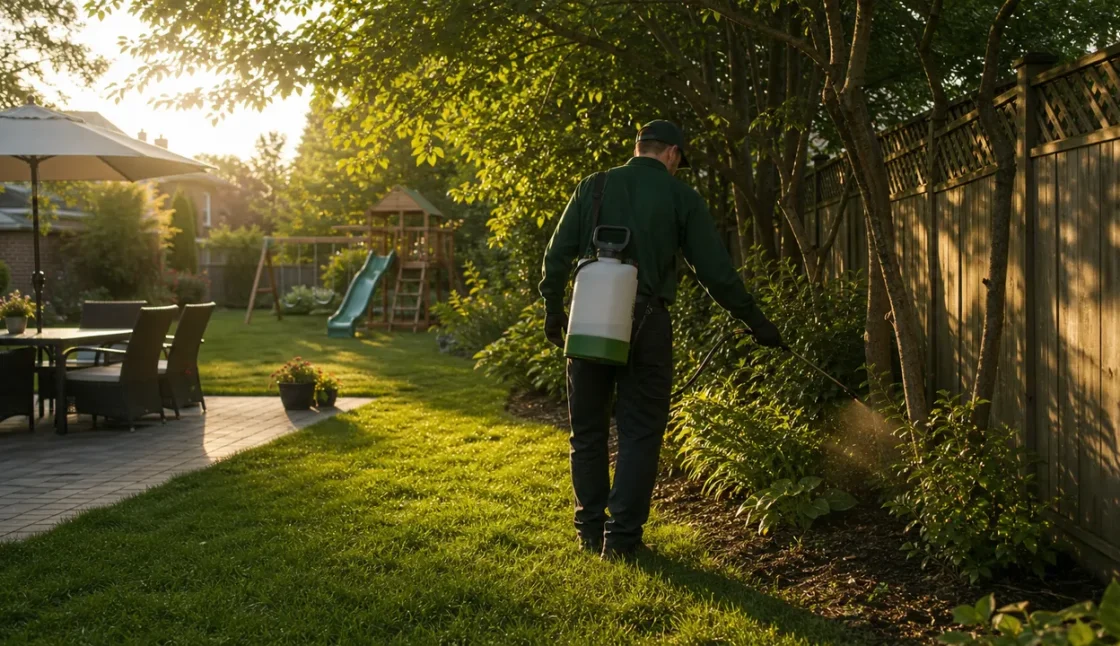
Tick programs focus on habitat. Ticks favour leaf litter, tall grass edges, shaded landscaping and the transition zone between lawn and woods. Eco-oriented tick control reduces that habitat and treats those specific zones, usually around the perimeter of the yard rather than across open lawn. The goal is fewer encounters in the zones where your family and pets spend time. No honest provider promises zero ticks forever. If you have pets, read through our tick control in Hamilton approach.
Ants, spiders and wasps
These are typically handled with exterior perimeter treatments around foundations, eaves and entry points, plus nest removal for wasps. Ant control relies on bait that reaches the colony, so the product choice differs from a mosquito barrier. Our ant control in Hamilton page covers the outdoor schedule.
Step 4: Shortlist providers and verify their eco claims
Several Hamilton companies advertise green or eco-oriented outdoor service. Based on what each publishes:
- Mosquito Man runs inspection-led, recurring yard and exterior programs, with a Super Hero Guarantee: free re-treatment within 14 days if pests return, and a full refund if you’re not completely satisfied. There are no long-term contracts, and you can cancel anytime.
- BuzzSkito is a mosquito and tick specialist that publishes Hamilton plan pricing (see the pricing section below).
- Odds N Sods describes organic and natural alternative options (including a garlic-based option) on its pest control page, and includes some pricing there.
- Mountain Pest Control has a Hamilton “green pest control” landing page focused on safety around pets, children and allergies. At the time of our review, it gave limited detail on methods and no pricing.
- The Green Queen positions its pest control around integrated pest management (IPM) and tailored plans, with a process outline and FAQ.
- Spider Squad publishes licensing and insurance details and an exterior-first service day, with a 14-day respray guarantee.
Treat that list as a starting point. Verify details directly with each company, because offerings and prices change. Then ask every provider the same questions:
- What product are you applying, and what’s its PMRA registration (PCP) number?
- Which pests and which outdoor areas does that label cover?
- What do you do beyond spraying (inspection, standing-water guidance, larvicide, habitat advice)?
- What’s the re-entry or dry time before kids and pets can return?
- How often are follow-up visits scheduled, and what’s the logic behind that interval?
- What happens if pests come back between visits?
- Is there a contract, and can I cancel anytime?
Checkpoint: a provider who answers these specifically and without hedging has earned a place on your shortlist. Be wary of anyone who says only “it’s all natural” without naming a product.
Warning: don’t accept “100% natural” or “organic” at face value. Ask for the product name and registration number and compare them against the label.
Step 5: Understand schedules and typical pricing
Why outdoor treatments recur
A single outdoor treatment gives temporary relief. Mosquito larvae hatch continuously, rain washes away residue, and new adults arrive from neighbouring properties. Providers set frequency based on property conditions and product label instructions, which is why seasonal programs are the norm for mosquitoes and ticks. Every provider’s schedule differs. Ours is approximately every 21 days for yard treatments. Our guide on how often to schedule pest control in Hamilton covers year-round considerations.
Published pricing examples
Fixed eco-package pricing varies widely by property size and target pest, and most Hamilton providers quote after an inspection. The only Hamilton-specific plan pricing we found published was from BuzzSkito’s Hamilton page:
| Plan | Frequency | Published price |
|---|---|---|
| Basic | 5 sprays, monthly | $549 |
| Standard | 10 sprays, every 2 weeks | $994 |
| Exclusive | 20+ sprays, weekly | $2,049 |
| Single treatment | One visit | From $99 |
These are the company’s published figures in dollars, not quotes, and they may have changed. Odds N Sods lists some pricing on its pest control page, so check it directly. Mosquito Man, Mountain Pest Control, The Green Queen and Spider Squad quote by property. At Mosquito Man, you get a free estimate.
Note what the table shows: price depends heavily on spray frequency. Compare cost per application and the interval between visits, not just the seasonal total.
What changes your price
- Yard size and lot area
- Number of problem zones
- Visible standing water or persistent damp areas
- Tick habitat: leaf litter, brushy edges, wooded borders
- Access: locked gates, dense vegetation, steep slopes
- One-time event treatment versus full-season protection
Checkpoint: write down what each provider’s quote includes (number of visits, larvicide, perimeter, guarantee terms) so you can compare like with like.
Step 6: Prepare for the technician visit
- Clear toys, pet bowls, garden tools and furniture from the zones you flagged.
- Dump standing water and note any spots you couldn’t fix.
- Make sure gates are unlocked and the technician can reach all zones.
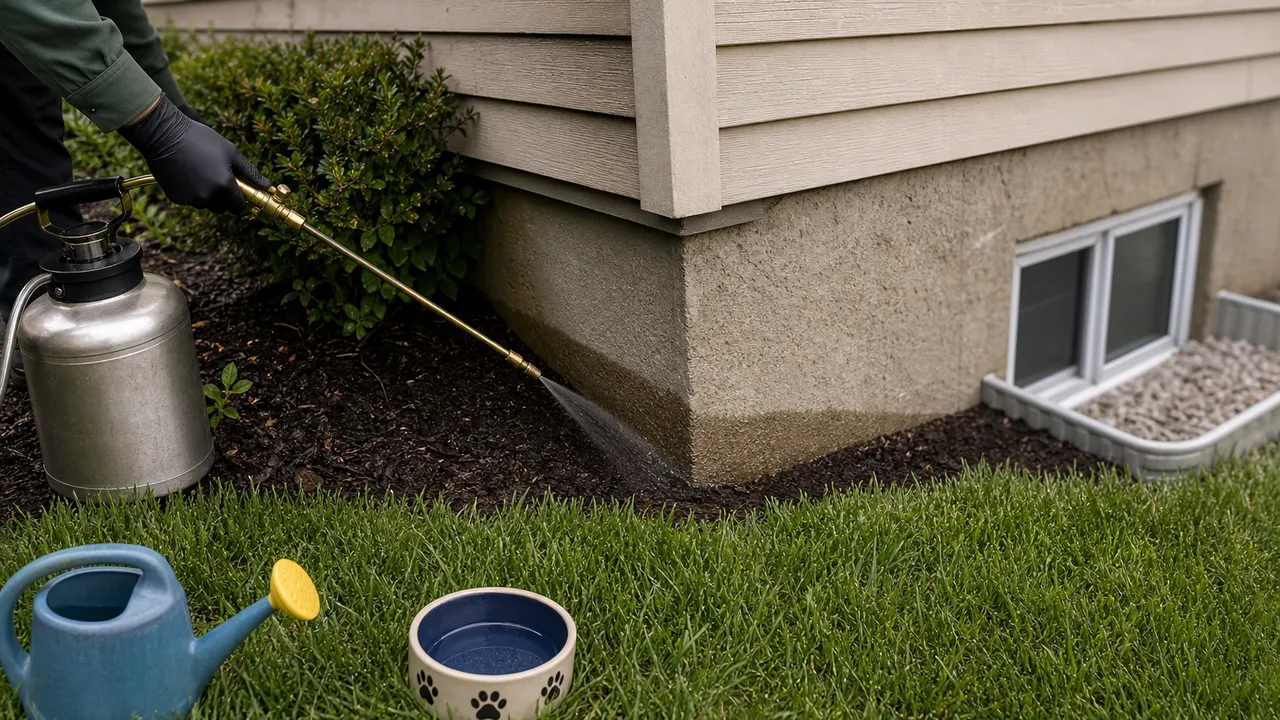
- Bring pets and children indoors during application.
- Ask the technician for the label’s re-entry or dry time and follow it exactly.
- Ask about covering or rinsing edible garden plants if treatment will be near them, and follow label directions.
Step 7: Check results at the right time
Day one brings the most noticeable change in adult mosquito activity around treated shrubs and resting zones. Over the first two or three applications, the effect builds as larval sources get addressed and the adult population stops being replenished. With ticks, expect fewer encounters in treated zones over time rather than an instant change.
Checkpoint: after the first visit, note bite frequency and pest sightings for two weeks. If pests return, contact the provider within the guarantee window. Ours is 14 days.
When eco options aren’t enough on their own
Eco-friendly methods work best for prevention, nuisance reduction and targeted zones. They may fall short alone when:
- You have a heavy, established infestation.
- There’s an active wasp nest or wildlife issue with a safety risk.
- The source of the problem is something a label-approved product can’t address, such as a neighbour’s stagnant pond or a structural moisture problem.
DIY has its own problems. Homemade mixes aren’t registered pest control products, and Health Canada advises against them. Spraying before breeding sites are dealt with wastes product, and mistimed treatments miss the life stage you’re targeting.
Book a professional inspection if pests keep reappearing, if nuisance levels make your yard unusable, or if there’s any safety concern with stinging insects or wildlife. In those cases, a professional may recommend stronger label-approved measures where necessary.
Eco-friendly outdoor treatments FAQ for Hamilton homeowners
Are eco-friendly outdoor treatments safe for children and pets?
Safety depends on product choice and following the label. Health Canada’s guidance is to use registered products and follow label directions, including re-entry and dry times. Keep kids and pets off treated areas until the label’s conditions are met.
How often do I need outdoor treatments in Hamilton?
Recurring programs are standard for mosquitoes and ticks. Our Yard Protection runs about every 21 days across five treatments. Frequency in your yard depends on conditions and the product used.
Do eco treatments work as fast as conventional options?
Product type matters less than method. Barrier treatments reduce adult activity quickly, while larvicides and source reduction prevent new adults from emerging. Both matter, and a plan using only one will underperform.
Will a treatment last all season?
No. A single mosquito treatment lasts roughly three to four weeks at Mosquito Man, depending on rain and conditions. That’s why programs are scheduled.
What should I do before the technician arrives?
Follow Step 6: clear the zones, dump water, unlock gates and keep people and pets indoors during application.
What should I ask a company to prove it’s eco-friendly?
Ask for product names, PMRA registration numbers, treatment areas, re-entry times, schedule logic and what they do beyond spraying. Step 4 has the full list.
How do I get an accurate price without guessing?
Request a free estimate. Prices depend on yard size, problem zones and plan type, so a quote after inspection is more reliable than any advertised range.
Troubleshooting common problems
Mosquitoes are back within a week. Check for new standing water first, especially after rain. Then contact your provider. Under our Super Hero Guarantee, we re-treat free within 14 days if pests return.
You see ticks despite treatment. Re-check habitat: leaf litter, tall grass and brush along fence lines. Ask your provider whether those zones were included in the treatment area.
Quotes vary wildly. Compare visits per season, zones covered, whether larvicide is included and what guarantee applies. A cheaper plan with fewer visits may cost more per application.
A company can’t name its products. Move on. You’re entitled to the product name and registration number.
Book a free Hamilton estimate
We serve Hamilton and surrounding communities with recurring Yard Protection, Home Protection and Full Protection plans. There are no long-term contracts, you can cancel anytime, and every service is backed by the Super Hero Guarantee.
To request a free estimate, visit our Hamilton pest control page. Include:
- Which pest is bothering you (mosquitoes, ticks or others)
- Your approximate backyard size
- The problem zones you mapped in Step 1
- Whether children or pets use the yard
What you’ve accomplished
You’ve defined what eco-friendly outdoor pest control actually requires, cleaned up the sources you can fix yourself, matched a treatment approach to your pest, and built a verification checklist that cuts through vague green marketing. You also have published pricing context and a prepared property.
Next, request two or three estimates, compare them on visits, coverage and guarantee terms, and book the one that answers your Step 4 questions most clearly. Then keep up your weekly source-reduction routine, because it makes every treatment work harder.