

Lyme disease awareness and tick control in Sudbury are inseparable concerns for residents across Greater Sudbury and the broader Northern Ontario region. Public Health Sudbury & Districts has confirmed the presence of blacklegged ticks — the primary Lyme disease carrier in Ontario — across both the Sudbury and Manitoulin districts. As tick populations continue to expand and establish across the region, proactive prevention at the property level has become an increasingly important part of protecting household health.
Freepik
The Tick Behind Lyme Disease in the Sudbury Region
The blacklegged tick (Ixodes scapularis), also known as the deer tick, is the species responsible for transmitting Lyme disease bacteria (Borrelia burgdorferi) to humans in Ontario. Public Health Sudbury & Districts actively monitors blacklegged tick populations and has urged residents across the region to take precautions when spending time outdoors. Not every blacklegged tick carries Lyme disease, but the expanding range and increasing density of the species across Northern Ontario means that encounters carry a real and growing risk that warrants active management.
How Lyme Disease Transmission Occurs
Lyme disease transmission from a tick bite is not instantaneous — a tick must be attached and actively feeding for a prolonged period before it can pass the bacteria to a human host. This makes prompt tick removal one of the most effective single actions available. Checking yourself, your children, and your pets thoroughly after any time spent in wooded areas, tall grass, gardens, or lakeside trails is one of the simplest and most powerful habits a Sudbury household can adopt throughout the active tick season.
Recognizing Lyme Disease Symptoms
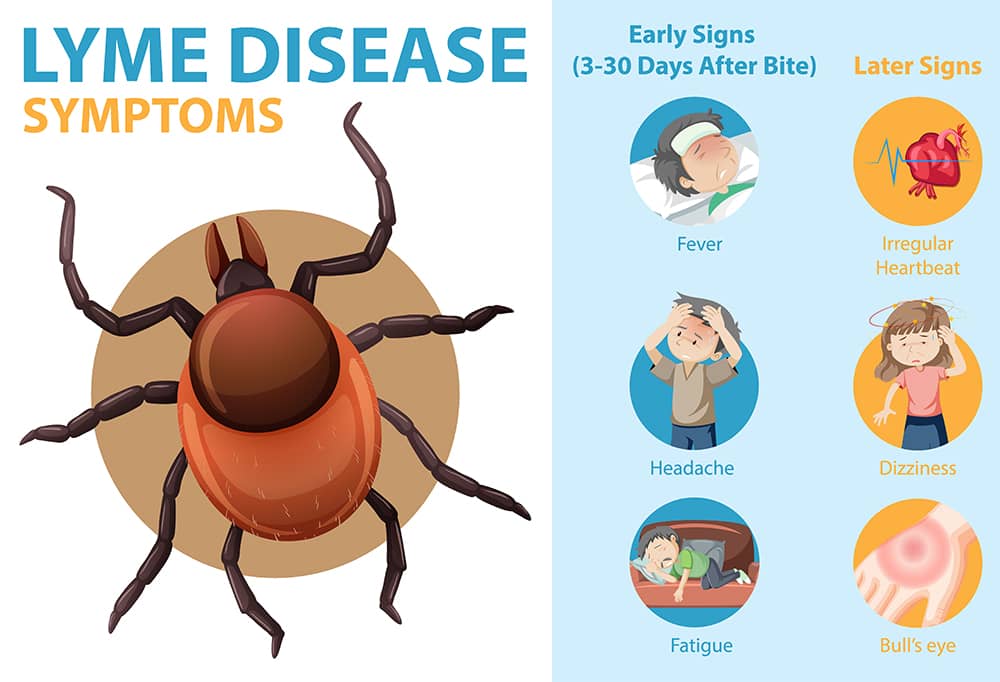
Early symptoms of Lyme disease can include a distinctive expanding bullseye rash (erythema migrans) at the bite site, fatigue, fever, headache, and joint or muscle pain. It is important to note that the rash does not appear in all cases. Any unexplained flu-like illness following outdoor activities — particularly activities in wooded or naturalized areas — should prompt a visit to a healthcare provider. Early diagnosis and antibiotic treatment lead to significantly better outcomes than delayed treatment.
Property-Level Tick Control as Disease Prevention
Reducing tick populations on your Sudbury property is one of the most direct ways to lower your household’s Lyme disease risk. Professional tick control services apply targeted perimeter treatments to the specific areas of your yard where blacklegged ticks are most concentrated — garden edges, shrub borders, lawn perimeters adjacent to wooded or naturalized zones, and shaded areas under decks or structures. Fewer ticks on your property translates directly into fewer opportunities for the kind of tick-human contact that leads to disease transmission.
Personal Protection Strategies for Sudbury Residents
- Wear light-coloured clothing with long sleeves and pants tucked into socks in tick habitat areas
- Apply Health Canada-approved repellents containing DEET or Icaridin before outdoor activities
- Stay on cleared paths and walk in the centre of trails rather than along vegetation edges
- Shower promptly after outdoor activities to remove unattached ticks before they find a feeding site
- Perform a thorough tick check on your entire body, including the scalp, hairline, behind the ears, and in skin folds
- Check pets thoroughly before allowing them to enter the home
Pairing personal protective habits with professional tick control on your property creates a layered, comprehensive defence against Lyme disease risk specific to the Greater Sudbury environment.
Benefits of Tick Control for Lyme Disease Prevention
- Directly reduces the number of disease-capable ticks present on your property
- Lowers the probability of tick-human contact for all household members
- Provides meaningful protection during the highest-risk seasonal windows
- Supports peace of mind for families enjoying Sudbury’s extensive outdoor spaces
Professional tick control in Sudbury is a practical, evidence-based investment in the long-term health and wellbeing of your entire household — and one of the most effective tools available for Lyme disease prevention in Northern Ontario.
Frequently Asked Questions: Lyme Disease and Tick Control Sudbury
Are blacklegged ticks found in Sudbury?
Yes. Public Health Sudbury & Districts has confirmed the presence of blacklegged ticks across the Sudbury and Manitoulin districts and actively encourages residents to take precautions.
How long does a tick need to be attached before transmitting Lyme disease?
Transmission generally requires extended attachment. Removing ticks as quickly as possible after discovery significantly lowers the risk.
Does professional tick control help prevent Lyme disease?
Yes. Reducing tick populations on your property directly decreases the likelihood of the tick-human contact that leads to disease transmission.