
Lyme disease prevention and tick control in Kingston are among the most pressing outdoor health concerns for residents of Eastern Ontario. The Kingston, Frontenac, Lennox and Addington region — now overseen by Southeast Public Health (SEPH) — carries a Lyme disease incidence rate approximately 20 times higher than the Ontario provincial average, making it one of the most affected public health regions in the province. Up to 50 percent of blacklegged ticks in the KFL&A area carry the Borrelia bacteria responsible for Lyme disease. For Kingston families, proactive tick control at the property level is one of the most practical and direct tools available for reducing this elevated risk.
Freepik
The Tick Species Behind Lyme Disease in Kingston
The blacklegged tick (Ixodes scapularis), commonly known as the deer tick, is the species responsible for transmitting Lyme disease, anaplasmosis, babesiosis, and Powassan virus in Eastern Ontario. Scientific surveillance data has identified the Kingston-Gananoque corridor along the St. Lawrence River as a cluster of elevated infected tick density and elevated human Lyme disease incidence. The Frontenac Arch — a forested land bridge connecting the Canadian Shield to the Adirondack Mountains — acts as a natural wildlife corridor that facilitates ongoing tick dispersal into Kingston and surrounding communities of Napanee, Gananoque, and Frontenac County.
How Lyme Disease Transmission Occurs in the KFL&A Region
Lyme disease is not transmitted at the moment of a tick bite — the blacklegged tick must remain attached and actively feeding for at least 24 hours before it can pass the Borrelia bacteria to a human host. This makes prompt tick discovery and removal one of the most effective individual protective actions available. Conducting thorough tick checks on yourself, your children, and your pets after any time spent outdoors — in gardens, trails, parks, or wooded backyards — is a habit that can meaningfully prevent disease transmission in the Kingston region’s high-tick environment.
Recognizing Lyme Disease and Other Tick-Borne Illness Symptoms
Early Lyme disease symptoms can include an expanding bullseye rash (erythema migrans) at the bite site, fever, fatigue, headache, and joint or muscle pain. The bullseye rash appears in approximately 70 to 80 percent of cases — meaning a meaningful proportion of infected individuals do not develop it. Any unexplained flu-like illness following outdoor activity in the Kingston area warrants a visit to a healthcare provider. Anaplasmosis and babesiosis — also transmitted by blacklegged ticks in the KFL&A region and reportable as Diseases of Public Health Significance in Ontario since July 2023 — carry their own symptom profiles and similarly benefit from early diagnosis and treatment.
Property-Level Tick Control as Disease Prevention
Reducing tick populations on your Kingston property is one of the most direct and impactful ways to lower your household’s risk of tick-borne illness. Professional tick control services apply targeted perimeter treatments to the specific areas of your yard where blacklegged ticks are most concentrated — garden borders, shrub lines, lawn edges adjacent to naturalized or wooded zones, and shaded areas beneath decks. In a region where up to half of local blacklegged ticks carry Lyme disease bacteria, reducing tick-human contact on your property is a meaningful disease prevention strategy.
Personal Protection Strategies for Kingston Residents
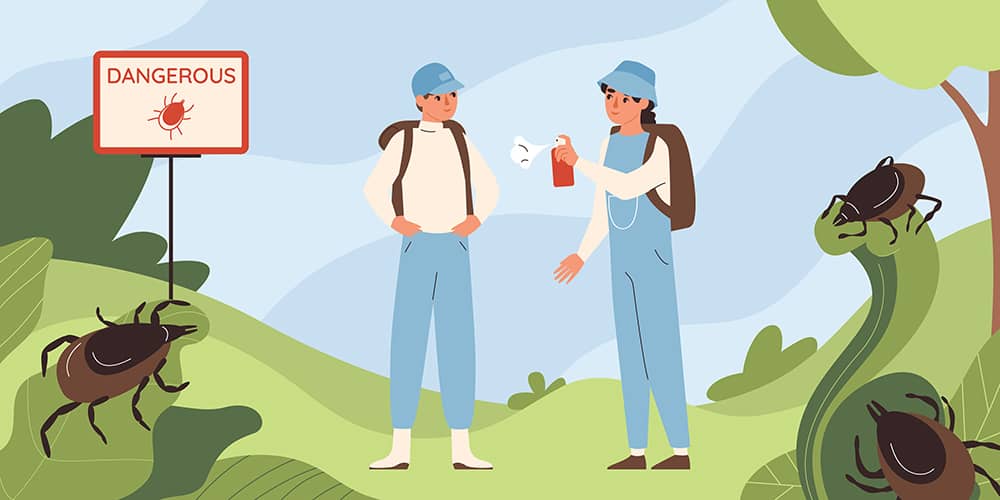
- Wear light-coloured clothing with long sleeves and pants tucked into socks in tick habitat areas
- Apply Health Canada-approved repellents containing DEET or Icaridin before outdoor activities
- Shower or bathe within two hours of returning indoors to help dislodge unattached ticks
- Perform a full body tick check after every outdoor outing — including the scalp, hairline, behind the ears, armpits, groin, and behind the knees
- Use e-tick.ca to submit photographs of any ticks found for identification assistance
- Seek medical attention promptly if you develop symptoms in the weeks following outdoor activity
Pairing these personal protective habits with professional tick control on your property creates a comprehensive, layered defence against Lyme disease in the Kingston region’s exceptionally active tick environment.
Benefits of Tick Control for Lyme Disease Prevention in Kingston
- Directly reduces the number of Lyme-capable ticks present on your property
- Lowers the probability of tick-human contact for all household members
- Provides meaningful protection during all active seasonal windows in the KFL&A region
- Supports peace of mind for families enjoying Kingston’s parks, trails, and waterways
In one of Ontario’s highest-risk Lyme disease regions, professional tick control in Kingston is not just a seasonal service — it is a practical, evidence-supported investment in the long-term health and safety of your entire household.
Frequently Asked Questions: Lyme Disease and Tick Control Kingston
Is Kingston, Ontario a high-risk area for Lyme disease?
Yes. The KFL&A region is confirmed as an established high-risk area for blacklegged ticks, with Lyme disease rates approximately 20 times higher than the Ontario provincial average.
How long does a tick need to be attached before transmitting Lyme disease in Kingston?
At least 24 hours of attachment is typically required for transmission. Removing ticks promptly after discovery significantly reduces the risk of contracting Lyme disease.
Does professional tick control reduce Lyme disease risk for Kingston families?
Yes. Reducing the number of infected ticks on your property directly decreases the probability of the tick-human contact responsible for disease transmission in the KFL&A region.