
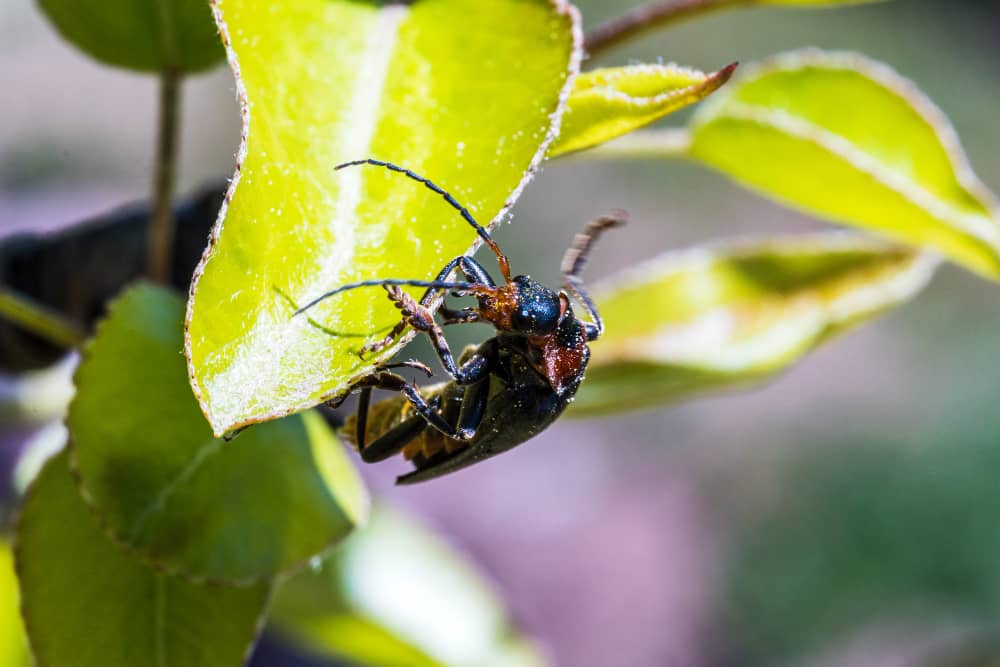
Effective tick control in Kingston starts at the boundaries of your own property. The KFL&A region — now served by Southeast Public Health — is one of Ontario’s most established high-risk areas for blacklegged ticks. Research published in peer-reviewed journals has identified the Kingston-Gananoque corridor along the St. Lawrence River as a spatiotemporal cluster of high tick density and elevated human Lyme disease cases. For Kingston homeowners, understanding where ticks hide on their property and how to disrupt those conditions is the foundation of keeping families and pets safe through the entire outdoor season.
Freepik
Where Ticks Concentrate on Kingston Properties
Blacklegged ticks in Kingston yards are not distributed randomly. They concentrate in specific microhabitats where conditions are most favourable for survival. The classic high-risk zone, described by public health researchers as the “intersection between field and forest,” is exactly the kind of transition edge that is common throughout Kingston’s residential and semi-rural properties. Garden borders with leaf litter, shaded areas under decks and stairs, shrubby lawn edges adjacent to wooded sections, and any areas of tall grass or dense ground cover provide the moist, cool shelter ticks need to survive between hosts.
How Wildlife Moves Ticks Into Kingston Yards
Deer, white-footed mice, chipmunks, and other wildlife common throughout Frontenac County and the Kingston area are the primary carriers bringing ticks from natural areas into residential properties. White-footed mice are especially significant — they are one of the main animal reservoirs for the Lyme disease bacteria, and their movement through gardens, under decks, and along property edges is a major driver of ongoing residential tick pressure in Kingston. Reducing mouse attractants, securing compost bins, and eliminating ground-level clutter helps reduce this pathway over time.
Yard Modifications That Reduce Tick Habitat in Kingston
Physical changes to your yard are among the most durable long-term strategies available for tick population reduction. Keeping grass trimmed short removes the moist, shaded layer where ticks wait for passing hosts. Installing a wood chip or gravel barrier at least one metre wide between your maintained lawn and any adjacent wooded or naturalized area creates a zone that ticks are reluctant to cross. Removing leaf litter, clearing brush piles, stacking firewood off the ground and away from the home, and trimming dense low vegetation all eliminate harborage zones that allow ticks to persist on your Kingston property throughout the season.
Professional Yard Tick Treatments for Kingston Homeowners
When habitat modifications alone are not sufficient — particularly on Kingston properties bordering wooded areas, conservation land, or the green corridors of the Frontenac Arch — professional perimeter treatments provide targeted, reliable results. Licensed technicians apply barrier sprays along the specific zones where blacklegged ticks are most active, using Health Canada-approved products that deliver effective knockdown and lasting residual protection while remaining safe for people and pets once fully dry.
DIY vs. Professional Tick Control in Kingston
- DIY products offer some benefit on small, lower-risk properties with minimal wildlife pressure
- Professional treatments provide far more thorough and consistent coverage on larger or wooded-edge properties
- Seasonal programs prevent re-infestation more reliably than single one-time applications
- Licensed professionals identify local tick species and tailor treatments accordingly
In one of Ontario’s most established blacklegged tick regions, professional yard tick control in Kingston provides the level of protection that the KFL&A region’s uniquely elevated risk environment demands.
Benefits of a Professionally Treated Kingston Yard
- Greater freedom for children and pets to enjoy outdoor spaces safely
- Reduced risk of Lyme disease, anaplasmosis, babesiosis, and Powassan virus
- More relaxed outdoor time for the whole family throughout the active tick season
- Long-term tick population reduction with consistent seasonal treatment
A proactive, layered approach to tick control in your Kingston yard is the most effective strategy available for protecting your household in Eastern Ontario’s high-risk tick environment.
Frequently Asked Questions: Yard Tick Control Kingston
What is the most effective way to reduce ticks in a Kingston yard?
Combining habitat modifications — mowing grass short, removing leaf litter, installing gravel barriers — with professional seasonal perimeter treatments delivers the strongest long-term results in the KFL&A region’s high-tick environment.
How often should a Kingston yard be treated for ticks?
Treatments are typically recommended in spring and again in late summer or early fall to target the two main windows of blacklegged tick activity in Eastern Ontario.
Can I treat my Kingston yard for ticks on my own?
DIY products can help manage lower-level infestations, but professional-grade treatments applied by licensed technicians are significantly more thorough and longer-lasting for the elevated tick pressure common across the KFL&A region.